
Friday, December 12, 2025
Build Trust Fast Without Big Logos: Proof Assets Guide

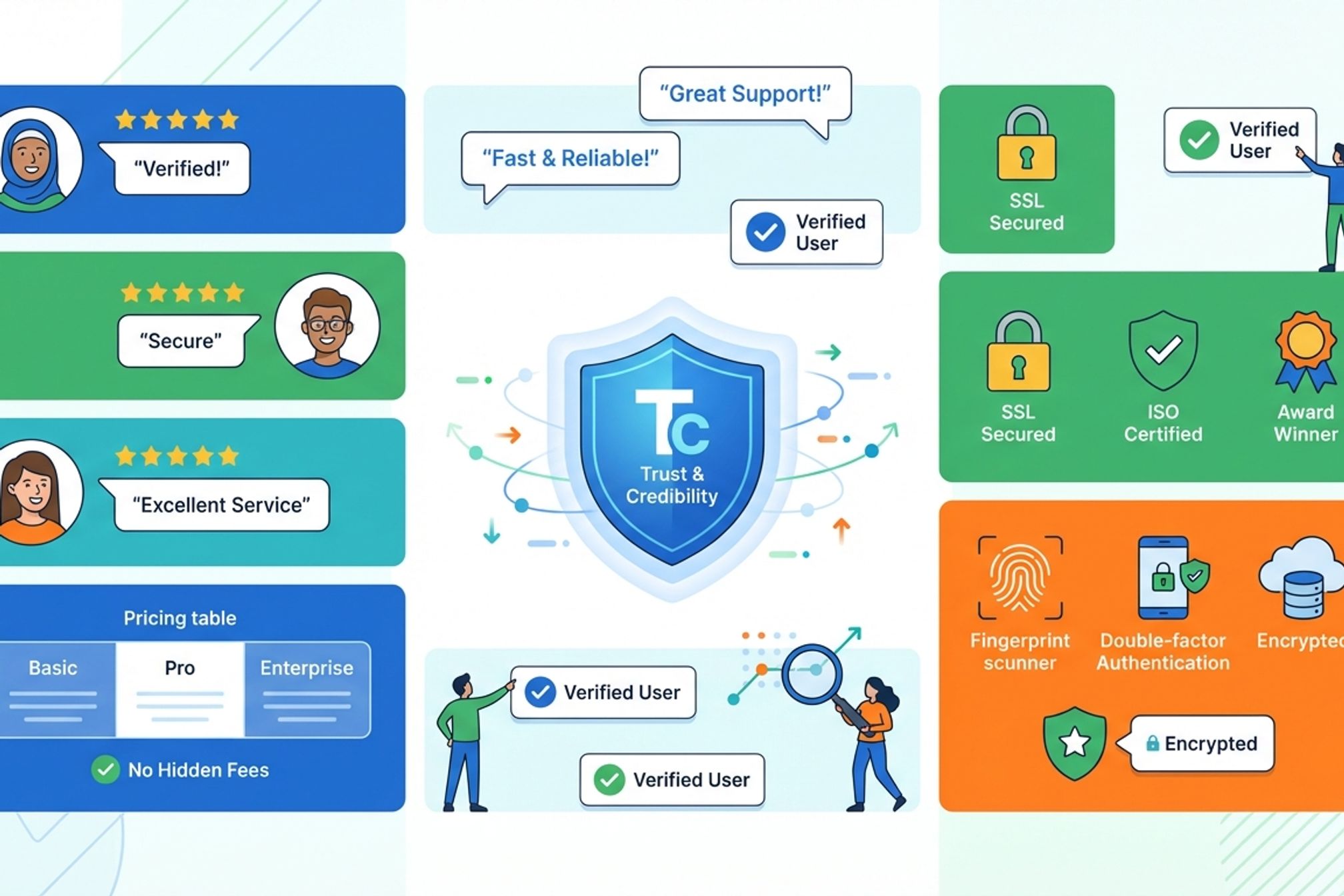
How to Build Trust Fast Without Big Logos: Proof Assets That Help Humans Convert and AI Cite
You do not need famous logos to earn trust. You need specific, verifiable proof that you deliver results and operate transparently.
Big-brand logos borrow credibility. Proof assets create credibility. When your evidence is concrete, both humans and AI answer engines recognize authority. Focus on trust signals that show outcomes, accountability, and identity. Use names, dates, metrics, and third-party verification. Then structure and place them where decisions happen.
Resource-constrained teams win by systematizing trust. Create a repeatable loop to collect, publish, and refresh testimonials, case studies, and live stats. Add structured data so AI can read what people see. Platforms like Agent Berlin help you find visibility signals and automatically execute improvements across channels. That speed compounds trust and conversion within weeks.
Why Traditional Social Proof Fails for Most Businesses
Traditional social proof fails when it relies on recognition, not evidence. Unknown brands do not transfer trust, and generic praise persuades no one.
Logo walls assume the visitor knows or respects those companies. Most buyers do not. They want proof that you solved a problem like theirs. Vague quotes such as “Great service!” lack context, outcomes, and recency. They do not reduce perceived risk.
AI answer engines also discount empty logos. They prioritize attributable claims, consistent identity, and corroboration. A quote with a full name, role, and metric communicates more than ten anonymous blurbs. Replace recognition theater with outcome clarity. When evidence is specific and verifiable, both people and machines upgrade your credibility.
What Are Proof Assets and Why Do They Matter for AI Citation?
Proof assets are verifiable artifacts that demonstrate outcomes, competence, or safeguards. They include testimonials, case studies, certifications, live stats, and documented processes.
Proof assets matter for AI citation because they are machine-detectable signals of authority. When evidence is structured with names, roles, dates, numbers, and schema markup, AI models can extract and reference it. This increases your chances of being quoted and recommended in answers.
To build strong proof assets, attach clear attribution and measurable results. Example: “Reduced CAC 31% in 60 days, per Stripe and HubSpot data.” Store sources, screenshots, and links to third-party pages. Publish in consistent formats so humans skim fast and AI parses confidently.
Social Proof Formats That Work Without Big Brand Names
Use formats that showcase real people, real outcomes, and real usage. Specific, attributed proof outperforms famous logos every time.
Start with detailed testimonials that include a full name, photo, role, and company. Add a video version for authenticity. Create outcome-based case studies featuring baseline metrics, interventions, and measurable results. Curate user-generated content, screenshots, and community posts that show adoption. Highlight founder or expert credentials and any media mentions. Show aggregate proof such as customer counts, completed projects, NPS, and time in business.
Each format works because it reduces uncertainty. Attribution, data, and recency allow buyers and AI systems to judge reliability. Publish consistently and keep it fresh.
Detailed Customer Testimonials with Full Attribution
A detailed testimonial with full attribution is a short case study. Include the customer’s name, photo, role, company, and a concrete outcome.
Structure each testimonial around a problem, action, and result. Example: “We cut onboarding time from 14 to 5 days after adopting the new flow.” Add one metric, one quote, and one credibility element such as a LinkedIn profile link. Keep it 50–120 words. Place short versions inline and a longer version on your “Wall of Love.”
Collect testimonials within 7–14 days of delivering value. Use a form with prompts: challenge, hesitation, result, metric, and recommendation. Ask for permission to use names and logos. When you anchor testimonials to identities and numbers, both humans and AI rate them as trustworthy.
Video Testimonials Showing Real People
Video testimonials show emotion and authenticity that text alone cannot. A 60–90 second clip with a clear outcome converts strongly.
Script the flow without making it feel scripted. Use three prompts: the problem, the moment of value, and the quantified result. Record on a smartphone with natural light, a lapel mic, and a steady frame. Add on-screen lower thirds with name, role, company, and metric. Include captions for silent autoplay.
Publish videos on YouTube or Vimeo for shareability and embed on relevant pages. Add VideoObject schema with upload date, duration, and description. Link to the customer’s website or LinkedIn in the description for verification. Authentic faces plus measurable results create trust quickly.
Outcome-Based Case Studies with Specific Metrics
An outcome-based case study is a narrative with numbers. It shows the baseline, the intervention, and the measurable result with timestamps.
Keep it simple: 1-page summary, 3 graphs, and a quote. Include starting metrics, the actions you took, and results at 30, 60, and 90 days. Use absolute and relative metrics: “Leads increased from 120 to 210 per month (+75%). CAC fell from $480 to $330 (-31%).” Cite the data source, such as GA4, CRM, or payment processor.
Publish a PDF and a page version with Article schema. Add images of dashboards, redacted only where required. Invite the client to co-sign the results on LinkedIn to add third-party verification. Case studies with numbers outperform logo lists by a wide margin.
User-Generated Content and Community Showcases
User-generated content (UGC) proves real adoption. Screenshots, tweets, Loom videos, and forum posts show genuine usage and outcomes.
Curate UGC into a living gallery. Tag each entry with a name, platform, date, and context. Example: “Jane Patel, Head of RevOps, shared a Loom on reducing manual reporting time by 8 hours weekly.” Ask creators for permission and link back to the original post. Include diverse formats: text, images, and short clips.
Automate collection with social listening and an inbox for submissions. Refresh monthly and highlight most-viewed entries. Add schema for images and videos where possible. Real people showing real work makes trust tangible for buyers and AI engines.
Founder and Expert Social Proof
Founder and expert social proof converts when it connects credentials to the problem you solve. List relevant roles, outcomes, and published work.
Create a concise founder bio that includes years of experience, notable results, and specific domains. Example: “12 years in B2B growth. Led teams that added $18M ARR.” Link to talks, articles, patents, or open-source contributions. Add an “Outside validation” strip with podcasts, guest posts, or conference appearances.
Use Person schema for founders and key experts. Include sameAs links to LinkedIn, GitHub, Google Scholar, or Crunchbase. Buyers trust the operator behind the product, and AI engines use identity graphs to validate expertise.
Aggregate Social Proof That Demonstrates Scale
Aggregate proof shows traction at a glance. Display counts, rates, and time-based milestones with clear labels and sources.
Use numbers that matter: customers served, active users, projects delivered, uptime, response time, NPS, and years in business. Example: “3,842 active users this month. 99.96% uptime past 12 months. Median support reply: 11 minutes.” Update at least monthly and show the last updated date.
Pull metrics from authoritative systems like Stripe, GA4, PostHog, or Statuspage. Visualize with simple tiles or a minimal chart. Add AggregateRating schema where relevant. Scale signals reduce perceived risk and help AI engines cite your authority with confidence.
How Transparency Signals Build Credibility
Transparency reduces perceived risk because it shows confidence and accountability. Publish your pricing, process, team, policies, and limitations.
Buyers distrust gates and vague claims. A public price page, a step-by-step delivery process, and named team members eliminate guesswork. Clear data practices and candid “what we do not do” sections show integrity. These signals convert skeptical visitors and help AI engines judge reliability.
Document your approach once, then update it as you learn. Transparency compounds because it aligns expectations early. Teams that publish openly get fewer objections and higher close rates.
Public Pricing Without Contact Gates
Public pricing builds trust because it respects the buyer’s research process. Hiding prices increases friction and doubt.
Publish plans with exact amounts, billing cadence, inclusions, and exclusions. Add toggles for monthly and annual rates. Show usage-based tiers with clear overage fees. Include a “What’s not included” box to avoid surprises. Add an ROI explainer with a sample calculation and typical ranges.
Track conversion lift after un-gating pricing. Many teams see 10–30% more qualified demos. Provide a simple estimate tool. Mark pricing changes with a date and changelog for transparency.
Behind-the-Scenes Content Showing Your Process
Behind-the-scenes content shows how you deliver outcomes. A documented process reduces fear that results depend on luck.
Publish a step-by-step overview with inputs, activities, outputs, and timing. Include artifacts such as checklists, templates, and sample deliverables. Example: “Week 1: audit. Week 2: quick wins deployed. Week 3–4: experiments live.” Add short clips of your tools or dashboards, with sensitive data removed.
Use HowTo or Article schema to make this machine-readable. Buyers understand your method, and AI engines can describe your process accurately in answers.
Team Pages with Real People and Backgrounds
A real team page proves accountability. Faces, roles, and backgrounds show that people stand behind the product.
Include headshots, names, titles, and short bios that highlight relevant experience. Link to LinkedIn profiles for verification. Add the hiring plan to signal growth and stability. If you are a solo founder, say so proudly and show your advisors or contractors.
Use Person schema for key members. Consistent identity across your site and profiles helps AI link entities correctly. Team visibility reduces buying anxiety and supports citation.
Clear Data and Privacy Policies
Clear data and privacy policies show you protect users. They also reduce legal risk and improve enterprise readiness.
Write in plain language. State what data you collect, why you collect it, where you store it, and how long you keep it. Explain user rights, opt-outs, and deletion procedures. Note sub-processors and security practices, such as encryption and access controls. Include a contact for privacy questions.
Link policies in the footer and relevant product flows. Add last updated dates. Use schema for policies if available, and reference applicable regulations like GDPR. Transparency on data keeps buyers and AI comfortable recommending you.
Openly Sharing Methodology and Limitations
Stating what you do not do increases trust. Declaring limitations prevents misalignment and shows maturity.
Create a “Methodology and Limits” page. List your approach, assumptions, and known trade-offs. Example: “We optimize for time-to-value over full customization.” Add a section titled “Not a Fit If” with three to five bullets. Include escalation paths and service-level boundaries.
Buyers value clarity over promises. AI systems prefer sources that acknowledge scope and cite constraints. Honesty saves deals that fit and filters deals that do not.
What Verification Methods Actually Build Trust?
Verification is third-party proof that your claims are real. Certifications, compliance, reviews, and live stats validate your story.
Choose verification that matches buyer risk. For software, prioritize security standards and uptime. For services, emphasize professional accreditations and client reviews. Integrate review platforms and payment trust marks. Show live data for availability and response times.
Display verification near decisions, not buried in a footer. Link badges to explainer pages or official registries. Third-party validation reduces perceived risk fast and helps AI engines cite your credibility.
Industry Certifications and Professional Memberships
Certifications prove you meet recognized standards. Memberships show you align with professional codes and communities.
List certifications with full names, issuing bodies, dates, and verification links. Examples include SOC 2 Type II, ISO 27001, Google Partner, HubSpot Solutions Partner, and PMP. For healthcare, note HIPAA-related attestations; for finance, relevant PCI-DSS scope. Avoid vague badges that lack issuers or dates.
Create a short explainer for each badge: what it means, how it was audited, and the renewal cycle. Link to the certificate or registry. Buyers and AI can then confirm your status in one click.
Security Badges and Compliance Indicators
Security badges signal you protect data and operations. Use them when they reflect real practices and audits.
Show SSL, SOC 2, ISO 27001, GDPR, and regional frameworks you actually follow. Add a security page with encryption standards, access controls, incident response, backups, and penetration testing cadence. Publish a public status page for uptime and incidents with timestamps.
Place badges near forms, checkout, and login pages. Link each badge to a details page or audit summary. AI systems treat verifiable security pages as strong trust signals.
Third-Party Review Platform Integrations
Third-party reviews deliver social proof you do not control. They are weighted heavily by buyers and AI alike.
Integrate platforms like G2, Trustpilot, Capterra, or Google Business Profile. Embed live widgets that show rating counts and recency. Encourage reviews with automated post-purchase or post-onboarding emails at day 14 and day 45.
Respond to every review within 72 hours. Thank advocates and address concerns publicly. Use Review and AggregateRating schema on your site. Link to your profile pages so visitors and AI can verify ratings at the source.
Real-Time Statistics and Live Data
Real-time stats show momentum and reliability. Live numbers reduce uncertainty better than static claims.
Display active users, recent signups, uptime, queue length, and support response time. Example: “23 people signed up in the last 24 hours.” “Median first reply: 9 minutes.” Use privacy-safe counters and aggregate data only. Update automatically from trusted systems.
Add “last updated” timestamps. Include links to your status page or data definitions. Live metrics prove performance today, which both buyers and AI engines value.
How to Use Structured Data for AI Citation of Your Credibility
Structured data turns your trust signals into machine-readable facts. Schema markup helps AI engines identify and cite your authority.
Use JSON-LD to declare who you are, who said what, and what ratings exist. Mark up organizations, people, reviews, articles, FAQs, and how-to steps. Keep IDs, URLs, and sameAs links consistent across pages. Validate with Google’s Rich Results Test and Schema.org validators.
When your proof assets are structured, AI can pull clean snippets with correct attribution. That increases your chances of being quoted in answer engines.
Organization Schema for Company Credibility
Organization schema identifies your entity. It tells AI who runs the site and how to verify it.
Include legal name, alternate name, founded date, headquarters address, contact points, logo, and social profiles via sameAs. Add brand, founding members, and tax ID if relevant. Link to your privacy, terms, and security pages. Use a consistent organization @id URL sitewide.
Result: search and AI systems connect mentions, reviews, and content to a single entity. That reduces confusion with similarly named companies and improves citation accuracy.
Review and AggregateRating Schema
Review and AggregateRating schema make your ratings machine-readable. They help AI summarize sentiment and quote real feedback.
Wrap each testimonial or review with author name, reviewBody, datePublished, and itemReviewed. Use AggregateRating on product or service pages with ratingValue, reviewCount, and bestRating. Align on the same item URLs used across your site.
Be honest. Do not mark up reviews you control without clear labeling. Link to the source when referencing third-party ratings. Structured reviews make both humans and AI trust your claims faster.
Person Schema for Team Members and Authors
Person schema links expertise to content. It helps AI verify who wrote what and why they are credible.
Add Person data to author bios and team pages. Include name, jobTitle, affiliation, description, and sameAs links to LinkedIn, GitHub, Google Scholar, or speaker profiles. Reference Person @id in Article or HowTo author fields.
This creates a clean identity graph. When AI summarizes your content, it can attribute insights to verified experts, which increases citation likelihood.
FAQPage Schema for Trust-Related Questions
FAQPage schema organizes your answers to common trust questions. It gives AI pre-structured Q&A content to cite.
Create an FAQ focused on credibility topics: pricing, security, data usage, uptime, refunds, and support response times. Mark each question with acceptedAnswer content that is concise and specific. Include dates and links to policy pages where needed.
Keep answers under 100 words and refresh quarterly. Clear FAQs reduce support volume and power AI answers with your words and facts.
HowTo and Article Schema for Process Transparency
HowTo and Article schema describe your methods step by step. They help AI explain your approach accurately.
Use HowTo for repeatable procedures like onboarding or audits. Include steps, tools, durations, and outcomes. Use Article for narratives such as case studies or methodology deep dives. Set author, datePublished, dateModified, and images.
This structure turns your process into reusable building blocks for AI. Clear markup increases “explainability,” citations, and user trust.
Where to Place Trust Signals for Maximum Impact
Place trust where decisions happen. Put high-signal assets above the fold and near conversion points.
On your homepage, show a concise value prop with one testimonial and a metric tile. On product and pricing pages, add case studies, reviews, and security details. Inside flows, include inline quotes and badges near forms and checkouts. Build a “Trust Hub” for deep verification and link it globally.
Avoid clutter. Use a consistent design system so proof assets feel native. Strategic placement lifts conversions without overwhelming visitors.
Above-the-Fold Homepage Trust Indicators
Above the fold, show one powerful proof element. Do not bury your credibility.
Combine a clear headline, a quantified outcome, and a single attributed testimonial. Add a small strip of aggregate stats such as user count and uptime. Include a security or compliance badge if relevant. Keep it scannable in under five seconds.
Test variations with A/B tools. Expect meaningful lifts in demo clicks or trials when the first screen answers, “Can I trust you?”
Product and Pricing Page Social Proof Sections
Product and pricing pages are decision pages. Load them with context-rich, relevant proof.
Include two to three mini case studies tied to the features discussed. Place third-party ratings and badges near plan comparison tables. Add a short FAQ focused on risk: data, refunds, and support. Show an ROI calculator with a real example and assumptions.
Track plan click-through and checkout starts before and after adding proof. These sections often deliver the highest conversion gains.
Inline Testimonials Throughout Conversion Flows
Inline testimonials reduce friction at the moment of doubt. Place them where fields or steps create anxiety.
Add a sentence-length quote under email capture forms. Place a short video next to payment fields. Use role-matched quotes near enterprise options. Keep content specific: “Setup took 22 minutes” beats “Easy to use.”
Measure drop-off by step. Expect reduced abandonment when proof addresses the exact objection at that step.
Dedicated Trust Hub or Wall-of-Love Page
A trust hub centralizes every proof asset. It serves buyers who want depth and supports AI with a single reference page.
Include detailed testimonials, case studies, certifications, live stats, security details, and links to reviews. Organize by category and tag with industries and use cases. Add search and filters for fast scanning.
Link to the hub from your footer and key CTAs. Keep it fresh with a “last updated” date and a changelog. A single source of truth simplifies verification and improves citations.
Footer Trust Badges and Author Bios
The footer is a quiet credibility anchor. Use it to reinforce trust without distraction.
Place security badges, certifications, and payment trust marks with links to details. Add quick links to privacy, terms, security, status, and your trust hub. Include a compact author bio for content pages, with name, title, and a credentials snippet.
Footers get scanned at decision time. Clear badges and bios here close the loop for both humans and AI.
How to Create Proof Assets from Scratch
You can build trust assets from day one. Start small, ship consistently, and compound your evidence.
Ask early customers for testimonials within two weeks of value delivered. Run short case-study interviews and track baseline metrics. Capture screenshots and screen recordings as proof. Build founder credibility with content and talks. Seek micro-influencer endorsements from peers, not celebrities.
Publish a monthly update showing progress, learnings, and roadmap. Spotlight first customers by name and outcome. In 90 days, you can assemble a credible library that outperforms missing logos.
Proactive Testimonial Requests from Early Customers
Ask for testimonials when value is fresh. A timely ask gets specific, energetic feedback.
Automate the request at a success trigger: first conversion, achieved KPI, or onboarding completion. Provide prompts that elicit outcomes: before state, hesitation, result, metric, and recommendation. Offer a 10-minute interview option for those who prefer talking.
Always include a release checkbox for name, role, company, and photo. Send a draft for approval within 24 hours. Speed plus structure yields high-quality, attributable quotes.
Case Study Interviews with Metric Tracking
Case studies require measurement. Track a small set of metrics from the start to make the story credible.
Before the engagement, record baseline KPIs like leads, CAC, LTV, cycle time, or uptime. During delivery, snapshot weekly progress. After 30, 60, and 90 days, capture final numbers. Then run a 20-minute interview with the client covering problem, actions, results, and lessons.
Package the case study as a page and a PDF. Include charts, a signed quote, and data sources. Numbers make your claims durable and quotable.
Screenshot and Screen Recording Testimonials
Screenshots and recordings provide visual proof. They show real results, timelines, and usage without heavy production.
Capture dashboards, email threads, or Slack messages where outcomes appear. Redact sensitive data. Add captions with dates, tools, and context. For recordings, use a 60–120 second Loom with a clear narrative: goal, change, result.
Organize assets in folders by customer and theme. Publish the best clips on relevant pages. Visual evidence speeds belief for humans and gives AI concrete artifacts to reference.
Building Founder Credibility Through Content
Founder content accelerates trust when it teaches, not pitches. Share repeatable frameworks and hard-earned lessons.
Publish weekly: one short playbook, one data point, and one example. Speak on podcasts, host AMAs, and answer niche forums. Collect these into an “Insights” page with your bio, credentials, and links. Close each piece with a mini case or metric.
Cite your sources and show your work. When you consistently teach, both buyers and AI label you an expert worth citing.
Micro-Influencer and Peer Endorsements
Peer endorsements carry more weight than celebrity shoutouts. Buyers care what similar operators say.
Identify 10–20 respected practitioners in your niche. Offer free access, co-create content, or exchange expertise. Ask for a single sentence and a link when they see value. Example: “Cut reporting time by 6 hours weekly—now standard in our stack.”
Feature endorsements near relevant features or pricing tiers. AI engines recognize quoted peers with public profiles, which strengthens your authority.
Transparent Build-in-Public Updates
Build-in-public updates show progress, priorities, and accountability. They also generate consistent content for AI to parse.
Publish monthly updates with shipped features, performance metrics, customer highlights, and lessons learned. Include screenshots and dates. Share roadmap changes with reasons. Admit misses and explain fixes.
Host updates on your blog and cross-post to social channels. Add dates and anchors so AI can reference specific changes. Consistent transparency compounds trust quickly.
Format and Display Best Practices That Signal Legitimacy
Great proof is clear, specific, attributed, and current. Format your assets so humans skim and AI parses.
Use real names, photos, roles, and company names. Add outcome metrics and data sources. Include dates to show recency. Link to third-party profiles and reviews for verification. Present a mix of text, video, and images. Rotate content quarterly to avoid staleness.
Avoid generic praise and anonymous quotes. Design with consistent card components and headings. Clarity and structure are what both buyers and answer engines reward.
Include Real Names, Photos, and Company Details
Attribution is the strongest trust lever. Anonymous praise looks fabricated and gets ignored.
Include full name, role, company, and a photo for each testimonial. Link to LinkedIn or the company site. For sensitive industries, use role and company with approval and omit the photo. Always time-stamp the quote.
Attribution enables verification. Humans believe it more, and AI can connect entities reliably.
Add Specific Outcomes and Metrics
Numbers turn stories into proof. State what changed, by how much, and in what timeframe.
Use one lead metric and one supporting metric. Example: “Qualified demos increased 62% in 45 days. CAC decreased 18%.” Cite the system of record, like GA4 or Stripe. Present both absolute and percentage changes when relevant.
Metrics allow comparisons across vendors and time. They also make your content highly quotable.
Show Recency with Timestamps
Recency indicates relevance and reliability. Old wins do not guarantee current performance.
Add “date published” and “last updated” to testimonials, case studies, and stats. Note the time window for each result. Example: “Data from Mar–May 2025.” Update or retire assets every 6–12 months.
AI and humans both value fresh evidence. Timestamps prove your proof is current.
Link to Third-Party Review Platforms
Linking to third-party reviews proves you are not cherry-picking. It invites verification in one click.
Place recognizable platform logos with star ratings and counts. Link to G2, Trustpilot, Capterra, or Google Business Profile. Use UTM tags to track traffic and conversions from those links.
AI engines weight corroborated ratings higher. Connecting your site to verified profiles strengthens your authority graph.
Use Diverse Formats and Rotate Content
Diverse formats reach different decision styles and devices. Rotation keeps your proof fresh and visible.
Pair text quotes with short video clips and dashboard screenshots. Use carousels sparingly; static cards often perform better. Refresh the lineup quarterly based on performance. Feature the top three assets in each funnel stage.
Measure which format drives clicks and form completions. Diversity plus rotation maximizes impact over time.
How to Measure Trust Signal Effectiveness
Measure trust like you measure growth. Track conversion impact, engagement, and experiment results for each signal.
Instrument changes with before-and-after snapshots. Monitor conversion rate, form completion rate, and checkout abandonment where proof appears. Assess engagement on trust-heavy pages using time on page and scroll depth. Track clicks on case studies, reviews, and security pages.
Run A/B tests on formats, placements, and messages. The goal is not more proof; it is better proof where it matters.
Conversion Rate Changes with Trust Signals
Conversion lifts show whether proof reduces risk. If rates rise after adding trust assets, you are on track.
Create control and variant versions of key pages. Add one trust element at a time: testimonial, badge, or live stat. Track primary conversions like trial starts, demo requests, or purchases. Compare at least one full sales cycle or 2–4 weeks of traffic.
Document results and keep winning elements. Expect 5–25% improvements when trust gaps were the blocking issue.
Engagement Metrics for Proof Asset Sections
Engagement reveals whether visitors consume your proof. High engagement often precedes higher conversions.
Measure scroll depth to testimonial and case-study sections. Track time on page and clicks on “Read case study” and “View reviews.” Monitor interactions with videos and status pages. Segment by source to see which channels need deeper proof.
Use these insights to reorder or expand high-performing sections. Engagement is your early signal before conversions move.
A/B Testing Different Proof Formats
A/B testing shows which proof resonates. Test format, wording, placement, and media types.
Set a hypothesis like “Video testimonial near checkout reduces abandonment by 10%.” Split traffic evenly and run until you reach significance or two weeks. Test one variable at a time. Rotate winners into your default experience and document learnings.
Over time, build a playbook by page type and audience segment. Testing turns opinions into repeatable wins.
Real-World Examples: Trust Building Without Big Logos
You can build trust without enterprise logos by showing outcomes, identity, and verification. Here are practical patterns.
A SaaS startup shows live user counts, recent signups, and a 99.96% uptime tile. An agency publishes 1-page case studies with side-by-side metrics and client quotes. A solo consultant leans on credentials, detailed playbooks, and peer endorsements. An e-commerce brand features UGC, verified reviews, and shipping transparency.
Each example centers on specificity, attribution, and recency. That is what both humans and AI reward.
SaaS Startup: Customer Count and Signup Notifications
A SaaS startup can build trust with real-time traction and reliability. Live counters and uptime tiles convert quickly.
Show “Active users this month,” “Recent signups,” and “Workspaces created today.” Add a status component with uptime, incidents, and response time. Include a 60-second customer video and one metric-driven case study near “Start trial.”
Instrument the counters from your database or analytics with privacy-safe aggregation. Add timestamps and a link to your status page. Real-time trust wins trials.
Agency: Detailed Project Case Studies
An agency wins trust with outcome-focused, visual case studies. Prospects buy process and results, not promises.
Create standardized 1-pagers with problem, approach, deliverables, and metrics. Include before-and-after visuals and a client quote. Note timelines and budgets ranges. Publish three examples per core service. Add industry tags and stack used.
Place these near service descriptions and proposal CTAs. Expect improved close rates when prospects see projects that mirror their needs.
Solo Consultant: Personal Credibility and Peer Endorsements
A solo consultant can trust-stack with identity and outcomes. Your name is the brand—show your work.
Publish a tight bio with domain wins and years of experience. Add three mini case studies with metrics. Collect endorsements from respected peers and clients with full attribution. Share weekly playbooks or teardown threads that demonstrate expertise.
Link your LinkedIn, publications, and talks. AI and buyers both validate your authority through consistent, public signals.
E-commerce: User-Generated Content and Reviews
For e-commerce, UGC and verified reviews drive conversion. Shoppers want to see the product in real life.
Curate photo reviews and short videos on product pages. Highlight repeat purchase rates, delivery times, and return policies. Use trust marks from payment processors and SSL providers. Add real-time stock and shipping ETAs.
Link to your review profiles and show review counts with timestamps. Expect higher add-to-cart and lower return rates with transparent proof.
Why AI Answer Engines Prioritize Verification Signals
AI answer engines prioritize verification because it reduces hallucination risk. They prefer sources with structure, attribution, and corroboration.
Engines look for entity clarity, fresh dates, consistent author identities, and third-party links. Structured data, review schemas, and status pages make facts extractable. Content that cites data sources and includes names and roles gets favored as quotable material.
When you supply specific, verifiable proof, AI can confidently surface and cite you. Trustworthy structure drives visibility in modern discovery.
Your Next Steps: Audit and Build Your Trust Arsenal
To build trust fast, audit your current signals, fill gaps, and systematize updates. Specific, verifiable proof wins.
Step 1: Inventory testimonials, case studies, reviews, certifications, and live stats. Note attribution, metrics, and dates. Step 2: Prioritize fixes that reduce risk on decision pages. Step 3: Add schema for organization, people, reviews, and articles. Step 4: Set a monthly cadence to collect, publish, and refresh proof.
Within two weeks, you can ship high-impact assets. Within two months, you can operate a trust engine that serves both humans and AI.
Stay ahead of the AI search revolution
LLM-based search is transforming user behavior rapidly. Subscribe to get exclusive insights from our experiments, discoveries, and strategies that keep you competitive in this evolving landscape.
No spam. Unsubscribe anytime. Updates only when we have valuable insights to share.